

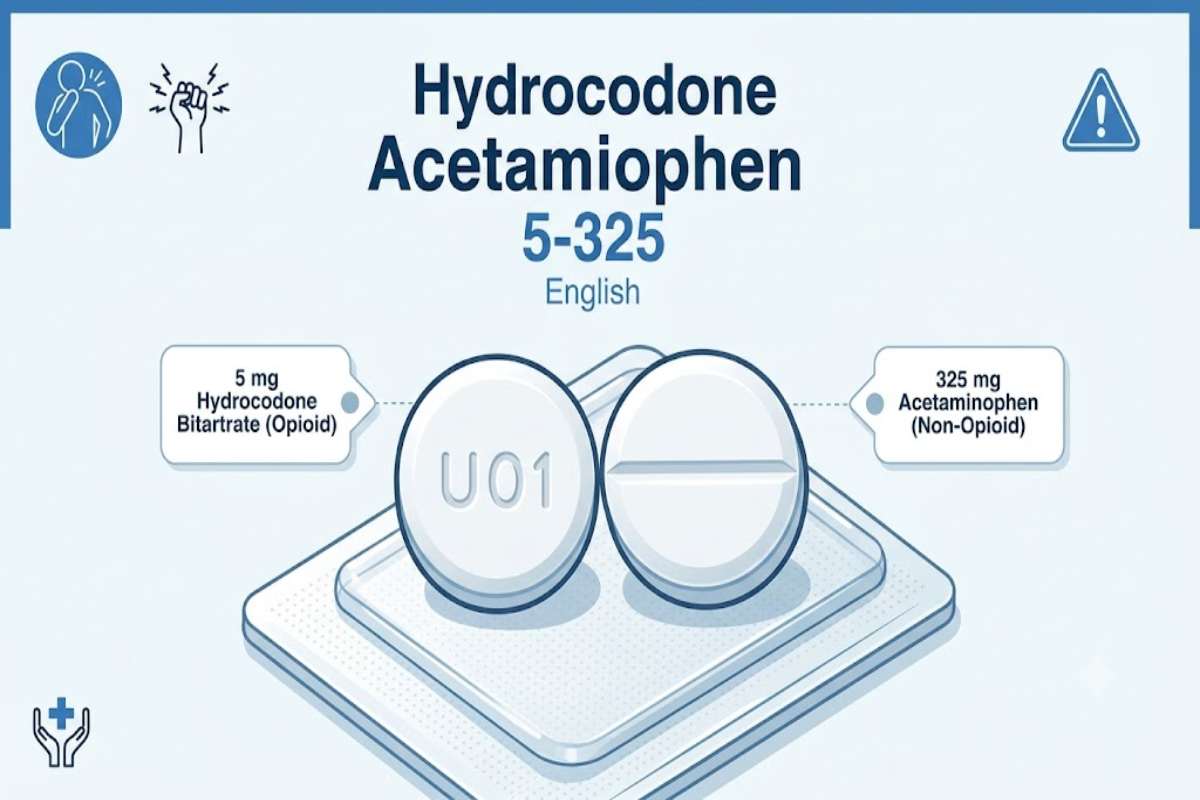
Hydrocodone acetaminophen 5-325 is a prescription combination pain medicine containing 5 mg of hydrocodone bitartrate and 325 mg of acetaminophen per tablet. Hydrocodone is an opioid pain reliever, while acetaminophen is a non-opioid pain reliever; the combination is used for pain when prescribed by a healthcare professional.
The term hydrocodone acetaminophen 5-325 English usually refers to English-language information about a prescription tablet containing two active ingredients: hydrocodone bitartrate 5 mg and acetaminophen 325 mg. It is important to understand that this is an opioid-containing medicine and should be used only according to a clinician’s prescription and instructions.
Table of Contents
What Is Hydrocodone Acetaminophen 5-325 English?
Combination of two drugs which work differently. Hydrocodone’s the analgesic opioid which alters the response of the Central Nervous System to pain and acetaminophen gives the supplementary pain-relieving effect.
The 5-325 designation refers to the amount of each active ingredient:
| Specification | Amount per tablet |
|---|---|
| Hydrocodone bitartrate | 5 mg |
| Acetaminophen | 325 mg |
| Medicine type | Prescription combination analgesic |
| Route | Oral tablet |
| Opioid component | Hydrocodone |
| Non-opioid component | Acetaminophen |
Different manufacturers can make tablets of different colours and shapes, with different markings and inactive ingredients. This can prevent you identifying an unknown pill simply from what it looks like.
How Does It Work?
This combination ingredient works differently than many others, because hydrocodone binds to receptors that recognize opioids, or similar compounds, and acetaminophen offers its pain-relief effect through a distinct pathway. Combined, they can offer a stronger pain relief effect as they complement one another.
Not suitable for any type or severity of pain. It depends on the individual patient, history of treatments, medications in use, personal medical history and the medical practitioner’s assessment of the condition.
Typical Prescribing Information
Some existing products have label instructions of “1 or 2 5/325 tablets every four to six hours with a maximum of 8 tablets per day”. It’s important to remember that these are general instructions and not specific dosage recommendations for any one person, as a prescribing doctor can prescribe instructions that differ to these.
Eight tablets would contain 2,600 mg of acetaminophen. That matters because acetaminophen can also be present in other prescription and non-prescription medicines.
The US FDA states that adults and children aged 12 years and older should not exceed 4,000 mg of acetaminophen from all medicines in 24 hours.
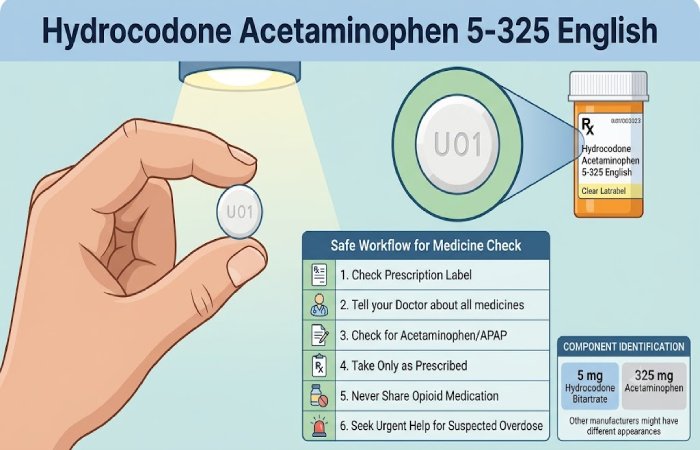
A Simple Safety Workflow
1: Check the prescription label and active ingredients.
2: Tell your doctor or pharmacist about every medicine, supplement and herbal product you use.
3: Check other medicines for acetaminophen/APAP.
4: Take the medicine only as prescribed.
5: Never share opioid medication with another person.
6: Seek urgent medical assistance for severe breathing problems, extreme sleepiness or suspected overdose.
The FDA specifically recommends checking whether other medicines contain acetaminophen to reduce the risk of accidentally exceeding the recommended total amount.
Performance Expectations: What Should You Expect?
The purpose of hydrocodone acetaminophen is pain relief, but individual responses vary. Some people may experience meaningful pain reduction, while others may experience side effects that limit treatment.
Common effects can include drowsiness, dizziness, nausea, constipation and mental clouding. Hydrocodone can also cause serious respiratory depression, particularly when treatment is started or the dose is increased.
This is why it is not appropriate to judge effectiveness by taking additional tablets without medical advice.
Pros and Limitations
| Potential advantages | Important limitations |
|---|---|
| Combines opioid and non-opioid analgesic effects | Can cause opioid-related side effects |
| Available in a defined 5/325 strength | Prescription-only medicine |
| May provide pain relief when appropriately prescribed | Can cause dependence and misuse |
| Tablet format is convenient for prescribed use | Acetaminophen adds liver-toxicity concerns if excessive amounts are taken |
| Well-established combination | Interactions with alcohol and other medicines can be serious |
Hydrocodone combination products can be habit-forming, and MedlinePlus warns that taking them differently from the prescribed directions can increase risk.
Who Should Be Particularly Cautious?
It is particularly important to exercise extra caution when using sedative medications, consuming alcohol or other drugs that can slow down the central nervous system. When these are mixed together, breathing problems, coma or other such serious outcomes may result and a sedative effect may be pronounced.
Those with liver issues ought to inquire with their doctor about treatments containing acetaminophen. Tell your doctor if you’re pregnant, have any prior records of addiction, or any other underlying medical conditions before treatment. Do not ever prescribe This medication for a child or another person unless prescribed individually to him.
Hydrocodone Acetaminophen vs Other Pain Medicines
The best alternative depends on the reason for treatment rather than simply choosing the strongest medicine.
| Option | Main characteristic | Typical consideration |
|---|---|---|
| Hydrocodone + acetaminophen | Opioid + non-opioid combination | Used only under medical supervision |
| Paracetamol/acetaminophen alone | Non-opioid analgesic | May be appropriate for milder pain |
| Ibuprofen | NSAID | Can be useful for some inflammatory pain |
| Other prescription analgesics | Varies | Choice depends on diagnosis and risk factors |
These medicines are not interchangeable dose-for-dose. A doctor or pharmacist should determine whether an alternative is suitable.
How to Check a Suspected Tablet
If you are trying to identify a tablet, do not rely solely on internet photographs. Check the prescription packaging, manufacturer information, tablet imprint and strength.
For example, one DailyMed-listed 5/325 product is described as a white-to-off-white round tablet marked “U01” on one side with a break line on the other. Other manufacturers may use different markings and appearances.
If the tablet is loose, unidentified or obtained outside a legitimate pharmacy supply chain, the safest approach is to have it professionally identified rather than taking it.
Legitimacy and Safe Purchasing
Medicine should also be sourced from a registered Pharmacy – it must be suitably packaged, labelled and accompanied by prescribing information. Do not be tempted to purchase medicines if a prescription is not provided (especially when the vendor cannot state where the product was manufactured, its strength, or its origins).
Local prescription, dispensing and controlled-drug constraints may vary in India from in USA if the patient is from the USA. Do not consider a USA trade name, a USA prescription instructions or USA availability equivalent
Conclusion
Hydrocodone acetaminophen 5-325 English information is most useful when it explains both the medicine’s composition and its limitations. The tablet contains 5 mg hydrocodone and 325 mg acetaminophen, combining opioid and non-opioid pain relief. Because hydrocodone can cause dependence and potentially life-threatening breathing problems, while excessive acetaminophen can damage the liver, safe use depends on following professional instructions and checking all other medicines for overlapping ingredients.