

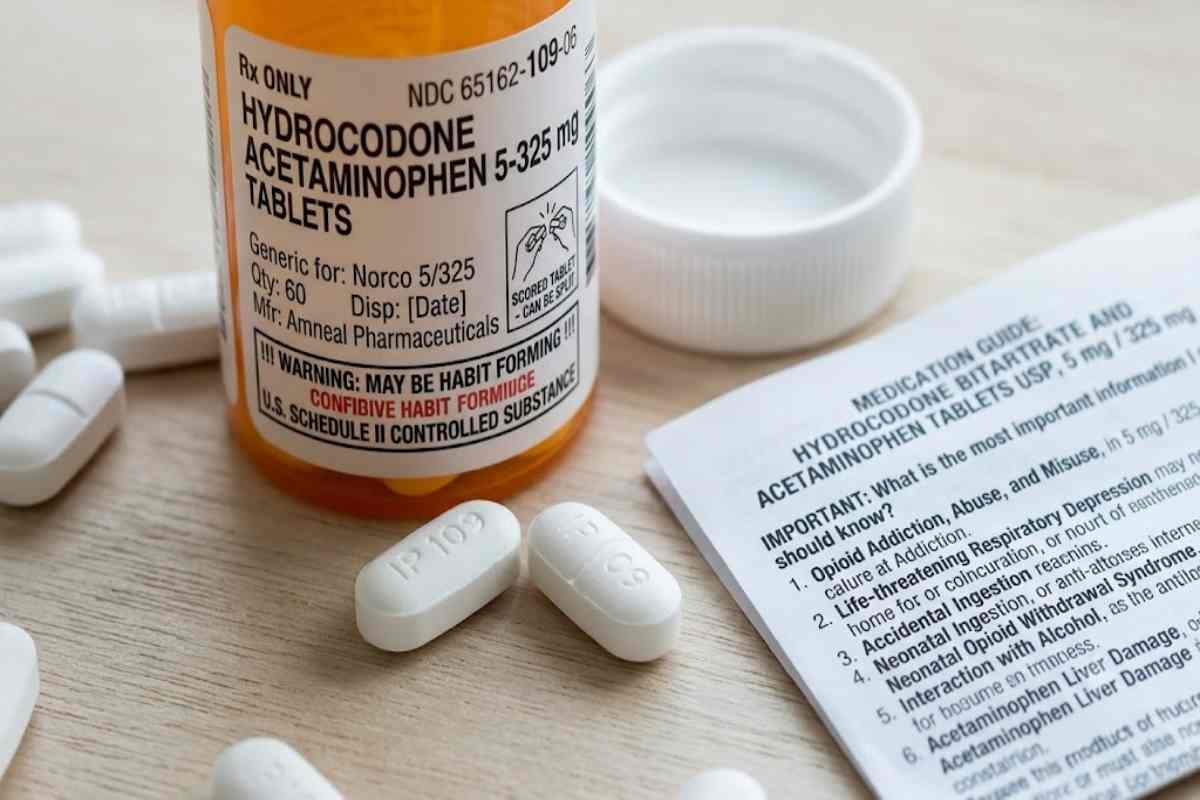
Hydrocodone acetaminophen 5-325 is a prescription combination medicine containing 5 mg of hydrocodone and 325 mg of acetaminophen per tablet. The Hydrocodone is an opioid pain reliever, while acetaminophen provides additional pain-relieving and fever-reducing effects.
Hydrocodone acetaminophen 5-325 is a prescription pain medicine combining an opioid with acetaminophen. Each tablet contains 5 mg of hydrocodone bitartrate and 325 mg of acetaminophen. Because hydrocodone can cause dependence, sedation and potentially dangerous breathing problems, this medicine should only be used exactly as prescribed by a qualified healthcare professional.
Table of Contents
What Is Hydrocodone Acetaminophen 5-325?
This medicine contains two active ingredients:
- Hydrocodone: an opioid analgesic that changes how the brain and nervous system respond to pain.
- Acetaminophen: a non-opioid analgesic and antipyretic that contributes to pain relief.
The “5-325” refers to the amount of each ingredient in one tablet: 5 mg hydrocodone and 325 mg acetaminophen. Other strengths also exist, so patients should check the exact product and label rather than assuming all hydrocodone combination tablets are equivalent.
Key Specifications
| Feature | Information |
|---|---|
| Active ingredients | Hydrocodone + acetaminophen |
| Strength | 5 mg / 325 mg |
| Form | Oral tablet |
| Hydrocodone type | Opioid analgesic |
| Acetaminophen role | Pain relief and fever reduction |
| Prescription status | Prescription medicine |
| Main concern | Opioid-related dependence and respiratory depression |
| Other concern | Excess acetaminophen may damage the liver |
Product appearance, inactive ingredients and packaging can vary by manufacturer, so tablet identification should not rely on colour or shape alone.
The current DailyMed prescribing information confirms that the 5 mg/325 mg formulation contains 5 mg hydrocodone bitartrate and 325 mg acetaminophen.
How Does It Work?
The two ingredients approach pain differently. Hydrocodone acts primarily through opioid receptors in the nervous system, reducing the perception and response to pain. Acetaminophen works through a different pain-relieving mechanism.
The combination is intended to provide stronger pain relief than either ingredient might provide alone in some clinical situations. It is not appropriate for every type of pain, however, and treatment decisions depend on the individual patient.
A Safe-Use Workflow
A practical workflow for someone who has been prescribed this medicine is:
Prescription → Pharmacist review → Check other medicines → Follow the label → Monitor response and side effects → Follow-up with the prescriber
Patients should tell their healthcare professional about prescription medicines, over-the-counter products, supplements and alcohol use because combinations can increase risks.

What to Expect From Treatment
The realistic goal is meaningful pain control, not necessarily complete elimination of pain. Some people experience drowsiness, dizziness, nausea or constipation. Hydrocodone combination products can also cause serious respiratory depression, particularly during the first 24–72 hours of treatment or after a dose increase.
Do not assume that stronger pain relief is always better. Increasing opioid exposure can also increase adverse effects and dependence-related risks. The appropriate treatment plan should therefore be individualised by a healthcare professional.
Pros and Limitations
| Potential advantages | Important limitations |
|---|---|
| Combines two pain-relieving ingredients | Contains an opioid |
| Can provide substantial pain relief when appropriately prescribed | Can cause drowsiness and dizziness |
| Tablet form is convenient | May cause constipation or nausea |
| Different strengths are available | Can be habit-forming |
| Established prescription medicine | Excess acetaminophen can harm the liver |
The presence of potential benefits does not make the medicine suitable for self-treatment.
Important Safety Considerations
Hydrocodone can be habit-forming and may cause serious or life-threatening breathing problems. Alcohol and certain medicines, particularly other central nervous system depressants, can increase the risk of sedation, respiratory depression and other serious effects.
Another important issue is duplicate acetaminophen exposure. People may unknowingly take acetaminophen from several medicines at the same time. Prescription labels and pharmacist advice should be checked carefully before adding another pain or cold medicine.
The product should also be stored securely and kept away from children and other people who might accidentally take it.
When to Seek Urgent Medical Help
Severe sleepiness, inability to wake, slow or shallow breathing, long pauses between breaths, blue or grey-looking skin, or loss of consciousness can indicate an opioid emergency. Immediate emergency medical attention is required.
Who Should Take Extra Care?
A healthcare professional should know about conditions such as breathing disorders, liver or kidney disease, pregnancy, breastfeeding, seizures and previous problems involving medicines or substance use. These factors can influence whether an opioid-containing medicine is appropriate.
Never share this prescription with another person, even if they have symptoms that appear similar.
Alternatives to Discuss With a Doctor

There is no single “best” pain medicine for everyone. Depending on the condition, a clinician may consider:
- Non-opioid pain medicines
- Physical therapy or rehabilitation
- Local or regional treatments
- Other prescription medicines
- Non-drug pain-management strategies
The appropriate alternative depends on the cause, severity and duration of pain, along with the person’s medical history.
Is Hydrocodone Acetaminophen 5-325 Legitimate?
Yes, hydrocodone/acetaminophen 5 mg/325 mg is a recognised prescription combination medicine. However, legitimate medicine should come through an authorised healthcare and pharmacy supply chain. Product labels, manufacturer information and packaging should be checked carefully, particularly when purchasing medicines in India or travelling internationally.
Do not buy opioid medicines from unverified online sellers or use somebody else’s prescription.
Frequently Asked Questions
What is hydrocodone acetaminophen 5-325 used for?
Hydrocodone acetaminophen 5-325 is a prescription combination used for pain management when a clinician determines that an opioid-containing medicine is appropriate.
Is hydrocodone acetaminophen 5-325 addictive?
Hydrocodone can be habit-forming. Taking the medicine differently from the prescription can increase the risk of misuse, dependence and overdose.
Can you drink alcohol with hydrocodone acetaminophen?
Alcohol should be avoided while taking hydrocodone combination products because it can increase sedation and potentially dangerous breathing problems.
Does 5-325 mean 5 mg and 325 mg?
Yes. For this formulation, “5-325” identifies 5 mg of hydrocodone and 325 mg of acetaminophen per tablet.
Can hydrocodone acetaminophen cause liver problems?
The acetaminophen component can cause serious liver injury when excessive amounts are taken, particularly when multiple acetaminophen-containing products are combined. Always discuss total acetaminophen exposure with a pharmacist or doctor.
Final Takeaway
Hydrocodone acetaminophen 5-325 is a prescription opioid combination containing 5 mg of hydrocodone and 325 mg of acetaminophen. It can be useful for appropriately selected patients, but it also carries significant risks, including sedation, dependence, respiratory depression and acetaminophen-related liver injury.
The safest approach is to use it only according to the prescription, avoid alcohol and unapproved combinations, keep it securely stored and ask a doctor or pharmacist whenever there is uncertainty about another medicine.
Medical disclaimer:
This article is for general education and does not replace individual medical advice, diagnosis or a prescription. Anyone currently taking this medicine should follow their own clinician’s instructions.
