

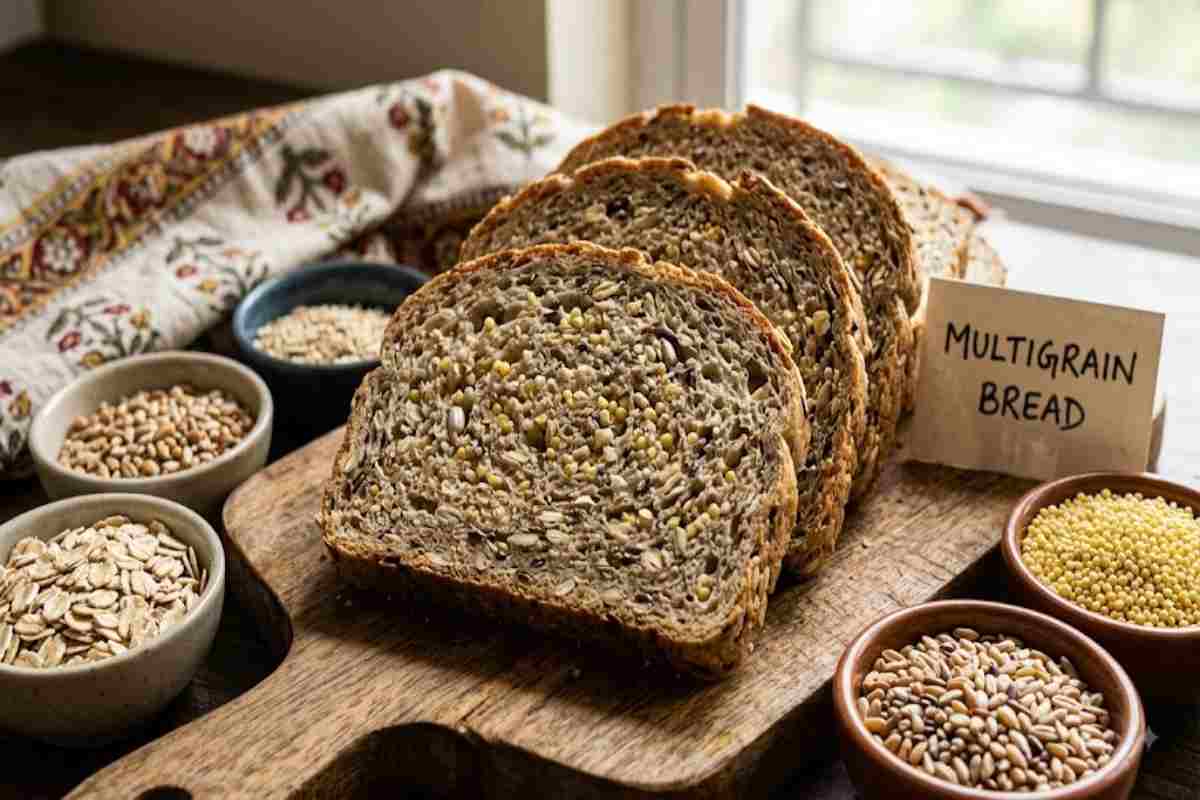
Multigrain bread is bread made using two or more types of grains, which may include wheat, oats, millet, rye, barley or other permitted grains. However, “multigrain” does not automatically mean wholegrain, so checking the ingredient list and nutrition label is important when choosing a healthier option.
Most households use it as an easy meal solution, but what really counts is the type of bread. We’re usually offered multigrain bread as a healthy alternative to regular white bread – simply because it has more than one variety of grains. The name itself doesn’t inform you about the quantity of whole grain, fibre, salt, or sugar used in a product.
A more sensible shopping strategy for those wanting a healthier option. Go beyond the front of packet claims, and focus on ingredients, bread mix, fibre, sodium and sugar.
Table of Contents
What Is Multigrain Bread?
Multigrain breads contain two or more whole grains. In a multigrain bread, the grains included in it could, among others, be a mixture of wheat, oats, millet, barley, rye, corn or any other grains.
In India, the Food Safety and Standards Authority of India (FSSAI) specifies that bread labelled “Multigrain Bread” must contain at least 20% grains other than wheat, calculated against the flour used.
This is a key point – multigrain isn’t the same as wholegrain. Multigrain is a loaf that might include a mix of different grains, but the primary flour might still be white flour. Look at the ingredients list and don’t simply buy any brown or seeded loaf.
What Does Multigrain Bread Usually Contain?
The exact recipe varies between brands and products. Common ingredients include:
- Wheat flour or whole wheat flour
- Oats
- Millet
- Barley
- Rye
- Maize
- Seeds such as flax, sesame or sunflower seeds
- Yeast
- Water
- Salt
- Vegetable oil
- Sometimes sugar, molasses or other ingredients
The nutritional value depends heavily on the proportions and processing of these ingredients.
Typical Features to Check
| Label feature | What it tells you | What to look for |
|---|---|---|
| Grain ingredients | Types of cereals used | Several recognisable grains |
| Whole wheat/wholegrain | Indicates less-refined grain | Preferably prominent in ingredients |
| Fibre | Helps compare carbohydrate quality | Higher fibre can be useful |
| Added sugar | Indicates sweetness added during production | Lower is generally preferable |
| Sodium | Indicates salt content | Compare similar products |
| Protein | Provides a basic nutrition comparison | Consider alongside the whole diet |
| Serving size | Gives context to nutrition numbers | Check before comparing labels |
Potential Benefits of Multigrain Bread
A good multigrain loaf can be a practical way to include a wider variety of cereals in the diet.
They contain fibre as well as other important natural nutrient. It is good and recommended for these nutrients, WHO estimates that carbohydrates will come primarily from foods such as fruits, vegetables, wholegrains, pulses(legumes),and Nuts. According WHO, a naturally occurring fiber content of at least 25 grammes in people ages over ten years is appropriate to consuming.
Depending on its ingredients, multigrain bread may therefore:
- Contribute dietary fibre
- Provide different nutrients from several grain sources
- Be more filling than some refined-grain breads
- Make sandwiches and breakfasts more nutritionally varied
- Offer a convenient alternative to eating only refined cereal products
However, these potential advantages depend on the actual formulation. A multigrain label is not a guarantee of high fibre or low sugar.
Multigrain Bread vs White and Whole-Wheat Bread
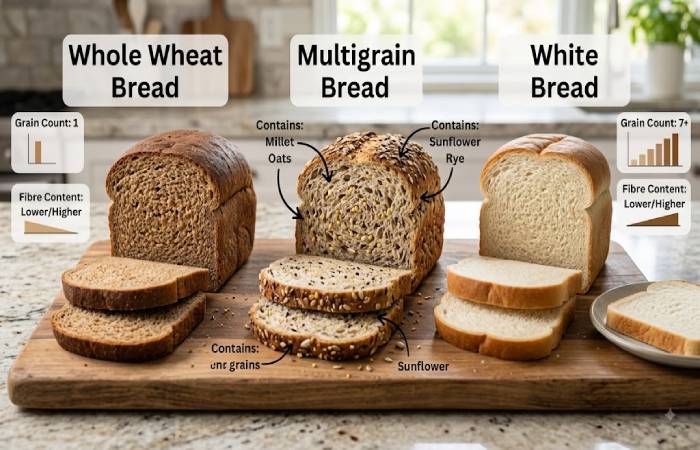
| Feature | Multigrain bread | Whole-wheat bread | White bread |
|---|---|---|---|
| Number of grains | Usually two or more | Primarily wheat | Primarily refined wheat |
| Wholegrain status | Depends on recipe | Can be high if made with whole wheat | Usually low |
| Fibre | Varies considerably | Usually higher when genuinely wholegrain | Generally lower |
| Refinement | Depends on ingredients | Can be minimally refined | Refined flour commonly used |
| Best buying approach | Check label | Check whole-wheat content | Check nutrition rather than colour |
| Main advantage | Variety of grains | Strong wholegrain option | Soft texture and convenience |
FSSAI’s current labelling regulations distinguish whole wheat bread, wheat/brown bread, white bread and multigrain bread based on their specified ingredients and composition.
How to Choose Multigrain Bread: A Simple Workflow
Buying a healthier loaf does not need to be complicated. Use this five-step workflow:
Step 1: Read the ingredient list.
Look for whole wheat or other whole grains rather than relying only on words such as “healthy”, “high fibre” or “multigrain”.
Step 2: Check the grain mix.
Identify which grains are actually present. A long list of grains does not necessarily mean that the product contains large amounts of each one.
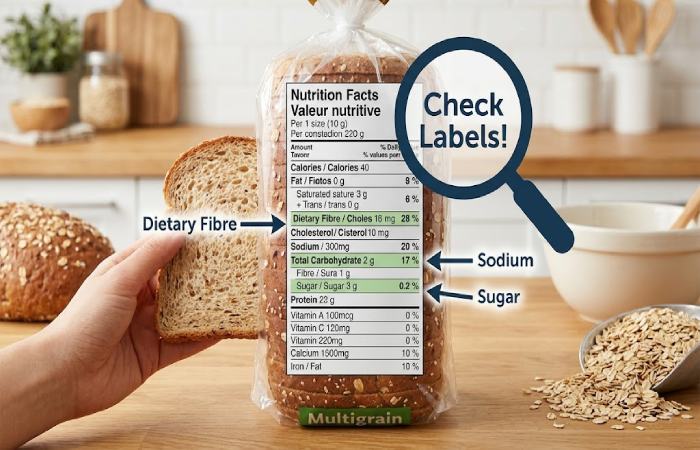
Step 3: Compare fibre.
When choosing between similar products, the nutrition panel can help identify the loaf with more fibre.
Step 4: Check sugar and sodium.
Some packaged breads contain added sugar and relatively high amounts of sodium. Compare labels instead of assuming that multigrain means low-sugar or low-salt.
Step 5: Consider the serving size.
Nutrition values can look different simply because manufacturers use different serving sizes.
What to Expect From Multigrain Bread
Multigrain bread should be viewed as one food within a balanced diet, not as a complete health solution.
While some experts suggest switching a fancy white bread to a real wholegrain, wholegrain has a higher fibre content and can positively boost a carb meal. However, too much any bread still adds considerable calories; you also have to consider what you’re pairing it with.
A sandwich constructed with multilayer grain bread and some veg, protein, or some legume can differ enormously from. The similar lunch bread with large-salted process-meats, cheese-spreads, or rich-sugar… sauce.”
WHO guidance emphasizes dietary variety and recommends diets built around foods such as whole grains, vegetables, fruits, legumes and nuts, while limiting foods high in unhealthy fats, free sugars and sodium.
Pros and Limitations
Pros
- Convenient source of grain-based carbohydrates
- Can contain several types of grains
- May provide useful dietary fibre when whole grains are included
- Easy to incorporate into breakfast or packed meals
- Can add variety to the diet
Limitations
- “Multigrain” does not automatically mean wholegrain
- Fibre content varies significantly between products
- Some varieties contain added sugar
- Sodium levels can differ between brands
- Health benefits depend on the overall diet and portion size
Who May Prefer It?
Multigrain bread can be a sensible everyday option for adults who enjoy bread and want to include a greater variety of grains in their diet.
It may be particularly useful for people looking for a convenient breakfast or lunch base. However, people managing conditions requiring specific carbohydrate, sodium or gluten restrictions should select products according to individual dietary advice rather than relying on the word “multigrain”.
People with coeliac disease, for example, need to avoid gluten-containing grains such as wheat, barley and rye unless a product is specifically suitable for their dietary requirements.
Multigrain Bread Buying Tips in India
When shopping, do not judge a loaf by its colour or packaging. A brown appearance can come from ingredients or colouring and does not, by itself, prove that the bread is wholegrain.
A practical checklist is:
- Look at the first few ingredients.
- Check whether whole wheat or other whole grains are included.
- Compare fibre between similar products.
- Check added sugar.
- Compare sodium.
- Check serving size.
- Look for allergen information where relevant.
- Consider freshness and storage instructions.
FSSAI’s bread standards also provide useful context for understanding how different bread categories are defined in India.
Frequently Asked Questions
Is multigrain bread healthy?
Multigrain bread can be a healthy choice, particularly when it contains substantial whole grains and provides useful dietary fibre. However, the term “multigrain” alone does not guarantee that a bread is wholegrain, low in sugar or low in sodium.
Is multigrain bread better than white bread?
It can be, particularly when the multigrain product contains whole grains and more fibre. However, compare the nutrition and ingredient labels rather than assuming every multigrain loaf is nutritionally superior.
Is multigrain bread good for weight management?
It can fit into a weight-management diet, but portion size and the rest of the meal matter. Fibre-rich bread may be more filling, but it still contributes calories.
Can I eat multigrain bread every day?
For many people, multigrain bread can be included regularly as part of a varied diet. Rotate your carbohydrate sources with foods such as whole grains, millets, pulses, vegetables and other minimally processed foods.
Does multigrain bread contain wheat?
Many multigrain breads contain wheat because wheat is commonly one of the primary grains. Always check the ingredient and allergen information if you need to avoid wheat or gluten.
Conclusion
While multigrain bread has its benefits, it’s not always the best, brownest or largest ingredient list on the bread. Scan for key wholegrain names, compare your fiber levels, and test for sodium, sugar when checking the nutritional panels.
With these, as part of a wider dietary pattern, eaten in conjunction with vegetables, fruit, pulses nuts and other foods that are minimally processed, a multigrain loaf that is of good quality can indeed play a healthy part. We just need to take all-of-it, and the sum total of that all into account, not just one message at the front of pack.
