

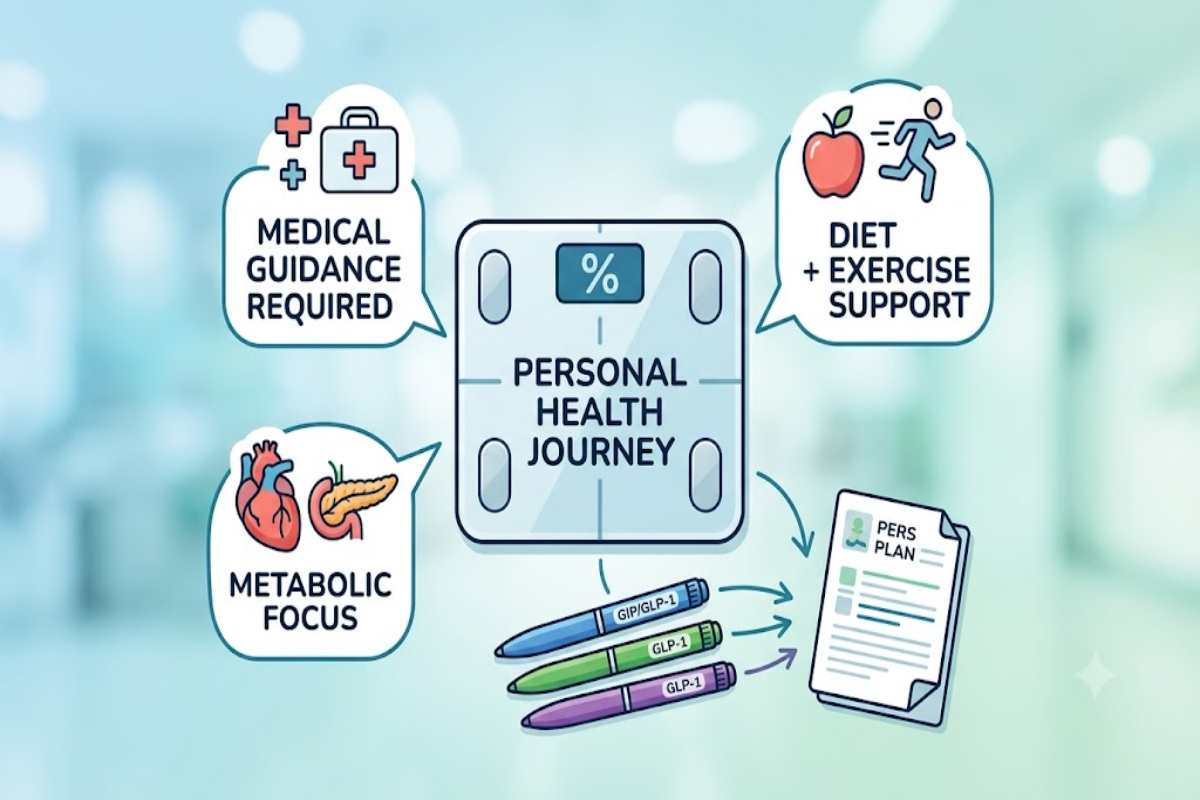
The answer to what is the best injection for weight loss depends on a person’s health, BMI, medical history and treatment goals. Semaglutide, tirzepatide and liraglutide are injectable medicines used in obesity treatment, but the most appropriate option should be selected with a qualified healthcare professional rather than based on weight-loss claims alone.
If you are wondering what is the best injection for weight loss, there is no single injection that is right for everyone. Injectable medicines such as semaglutide, tirzepatide and liraglutide can support weight management in eligible people, but they work alongside dietary changes, physical activity and ongoing medical supervision.
Table of Contents
What Are Weight-Loss Injections?
Many modern obesity-management injectables use drugs in a category called GLP-1 -based therapies. Some of these injectables, like tirzepatide, target both GIP and GLP-1 signals; the most common injectables work only on the GLP-1 pathway. These include semaglutide and liraglutide.
These medicines can influence appetite, fullness and blood-glucose regulation. They are not simply “fat-burning injections”. WHO describes GLP-1 therapies as medicines that can reduce food intake by increasing feelings of fullness and slowing digestion.
They are generally considered as part of a broader obesity-treatment plan rather than as a replacement for nutrition and exercise.
Which Injection Is Usually Considered?
There are three important injectable medicines to understand:
| Medicine | Main type | Typical dosing frequency* | Main role |
|---|---|---|---|
| Tirzepatide | GIP/GLP-1 agonist | Usually weekly | Weight management and metabolic health |
| Semaglutide | GLP-1 receptor agonist | Usually weekly | Chronic weight management |
| Liraglutide | GLP-1 receptor agonist | Usually daily | Weight management |
*Dosing schedules and approved indications vary by product, country and individual patient. A doctor determines the appropriate dose and escalation schedule.
The FDA approved tirzepatide for chronic weight management in eligible adults alongside a reduced-calorie diet and increased physical activity.
These are now explicitly mentioned by the WHO in its current recommendations for the management of obesity as some of the GLP-1-based treatments: liraglutide, semaglutide and tirzepatide in adults with obesity.
Tirzepatide vs Semaglutide vs Liraglutide
For someone comparing options, the broad differences are useful:
| Factor | Tirzepatide | Semaglutide | Liraglutide |
|---|---|---|---|
| Drug class | GIP/GLP-1 | GLP-1 | GLP-1 |
| Administration | Usually weekly | Usually weekly | Daily |
| Appetite effect | Strong appetite regulation | Appetite regulation | Appetite regulation |
| Weight-loss evidence | Strong | Strong | Established |
| Common digestive effects | Nausea, diarrhoea, constipation | Nausea, vomiting, constipation, diarrhoea | Similar gastrointestinal effects |
| Suitable for everyone? | No | No | No |
| Prescription/medical supervision | Required | Required | Required |
This is not a personal prescription, it is for guidance, since the clinical appropriateness must consider conditions of the patient (other pathologies), other medicaments, if it is pregnant, and / or the prior effect of the treatment used.
How Do Weight-Loss Injections Work?
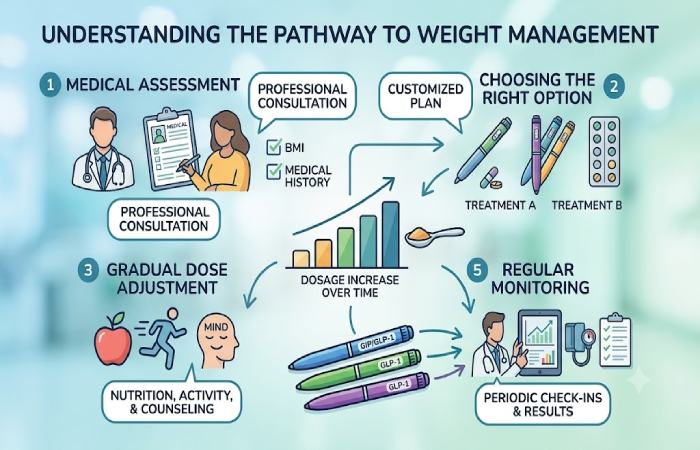
Step 1: Medical assessment
Typically, an examination would consult height and weight ( BMI ), the presence of any conditions linked to weight, the medications being taken, past medical history as well as past efforts to control weight.
Step 2: Choosing an appropriate medicine
The doctor/physician deciding the right drug and the right dosage. There is no “most powerful” injection to be chosen always.
Step 3: Gradual dose adjustment
There are many uses of dose escalation where the dose does not start at maximum at the beginning, to allow the body to accommodate and may limit GI issues.
Step 4: Lifestyle support
The medicine is most effective as part of an overall program of healthy eating, activity and behavioral support. The WHO specifically recommends the use of GLP-1 therapy in combination with planned behavioral intervention.
Step 5: Monitoring
Weight, side effects, blood glucose where relevant and overall health should be reviewed periodically.
What Results Can You Realistically Expect?
One of the biggest mistakes is expecting an injection to produce rapid or guaranteed weight loss.
WHO reports that most people taking GLP-1 therapies lose at least 5% of their body weight, although individual results vary.
Therefore weight changes vary greatly by the medicine, its dose, taking compliance, eating habits, the degree of exercise, starting weight and other physical condition of each person. Some patients may strongly react whereas the changes is a little in other people or the prescription may cease being issued due to side effects and the high costs.
NIDDK also notes that a 5% reduction in body weight over about six months can be a reasonable initial goal for some people, although an individual’s target should be determined with a healthcare professional.
Important expectation: these medicines should not be treated as a short-term cosmetic shortcut. Obesity is a chronic condition, and long-term follow-up may be necessary.
Benefits and Limitations
Potential benefits
- Can reduce appetite and food intake.
- May produce clinically meaningful weight loss in eligible patients.
- Can form part of a structured obesity-management programme.
- Some medicines also have important metabolic or cardiovascular benefits in specific populations.
Limitations
- They are not suitable for everyone.
- Gastrointestinal side effects are common.
- Treatment can be expensive or difficult to access.
- Long-term treatment may be required.
- Weight can change again after treatment is stopped.
- Counterfeit or inappropriate products purchased through informal channels can create serious risks.
WHO has specifically warned about falsified and substandard GLP-1 products and emphasises regulated distribution and prescribing by qualified healthcare professionals.
What Are the Common Side Effects?
Common side effects include:
- Nausea
- Vomiting
- Constipation
- Diarrhoea
- Reduced appetite
- Abdominal or digestive discomfort
WHO notes that more serious gastrointestinal and other complications, including pancreatitis and gallbladder-related problems, have also been associated with GLP-1 medicines and continue to be evaluated.
Seek medical advice promptly if you develop severe or persistent symptoms rather than adjusting the dose yourself.
Who May Be Considered for Treatment?
Eligibility varies by medicine and regulatory jurisdiction. WHO’s current conditional recommendation covers adults with obesity, defined as a BMI of 30 kg/m² or higher, while individual product indications may also include people with overweight and weight-related health conditions.
In the US, for example, the FDA’s indication for tirzepatide includes adults with obesity or adults with overweight plus at least one weight-related condition.
A clinician may therefore consider:
- BMI and waist-related health risk
- Type 2 diabetes
- High blood pressure
- Abnormal cholesterol
- Previous weight-management attempts
- Current medicines
- Pregnancy or plans for pregnancy
- Relevant gastrointestinal or other medical conditions
Who Should Avoid Self-Starting These Injections?
Do not buy or inject a weight-loss medicine simply because someone online claims it is the “best”.
Extra caution is particularly important during pregnancy, and people with significant medical conditions should be assessed before treatment. WHO’s obesity guidance does not recommend GLP-1 therapy for pregnant women because these medicines have not been tested in that population.
Never borrow another person’s injection, change doses without medical advice or purchase an unverified product from social-media sellers.
Are Weight-Loss Injections Available in India?
Availability and approved indications in India should be checked against current CDSCO information and the product’s approved prescribing information.
For example, CDSCO records show regulatory recommendations concerning semaglutide products for chronic weight management, including eligibility based on BMI and weight-related comorbidities.
This is important because the same active ingredient can have different brand names, formulations and approved indications. Therefore, a medicine approved for diabetes should not automatically be assumed to be approved for weight management in every formulation.
How to Choose Safely
A safer decision-making process is:
- Speak to a qualified doctor rather than choosing an injection from an advertisement.
- Confirm whether medication is appropriate for your BMI and health profile.
- Review other medicines and medical conditions.
- Discuss expected benefits and side effects.
- Use a regulated pharmacy or authorised medical channel.
- Combine treatment with appropriate nutrition and physical activity.
- Attend follow-up appointments to monitor progress and tolerability.
Frequently Asked Questions
What is the best injection for weight loss?
There is no universally best injection for weight loss. Tirzepatide, semaglutide and liraglutide are established options, but the appropriate choice depends on the individual’s health, eligibility, response and medical history.
Is tirzepatide better than semaglutide for weight loss?
Tirzepatide can produce substantial weight loss, but “better” depends on the individual. Comparative effectiveness, side effects, cost, availability and other medical considerations should all be discussed with a healthcare professional.
Can I take a weight-loss injection without a prescription?
Therefore, you should not self-start prescription weight-loss injections. WHO recommends that GLP-1 therapies be prescribed by qualified healthcare professionals and warns about products obtained through informal channels.
Do weight-loss injections replace exercise?
No. WHO recommends combining GLP-1 treatment with healthy eating, physical activity and behavioural support rather than relying on medication alone.
Final Takeaway
So, what is the best injection for weight loss? There is no one-size-fits-all answer. Tirzepatide, semaglutide and liraglutide can all play a role in medically supervised obesity treatment, but the right choice depends on your health profile, eligibility, expected benefits, side effects, cost and local regulatory status.
For Indian patients, it would be best to check with a licensed doctor and ensure it is obtained from genuine, regulatory approved channels. Weight loss injections, then should be considered just one part of the weight loss equation – not a substitute for long- term healthy diet and physical activity.
Medical note: This article is for general education and does not replace diagnosis or personalised medical advice. Prescription medicines should only be used under appropriate professional supervision.